How to Water Tomatoes
Most garden advice boils down to "water your tomatoes every two or three days." It's simple. It's also wrong more often than it's right. A calendar date doesn't know about the thunderstorm that dumped one inch last night.
It doesn't know whether your soil drains like sand or holds water like clay.
A fixed schedule ignores the three factors that actually matter: how fast your soil loses water, how much space your roots have, and what the weather did an hour ago. A plant in a five-gallon pot on a south-facing patio loses water twice as fast as the same tomato in heavy clay soil. Water that pot on a schedule while a storm rolls through, and the roots stay soggy.
Skip watering during a heat wave, and you'll see wilted leaves by lunch.
The payoff for misjudging is visible. Overwatering drowns out oxygen in the root zone, which invites root rot and fungal disease. Underwatering stops nutrient uptake, which leads to blossom end rot on the fruit.
Both mistakes come from the same habit: watering on the calendar instead of checking the plant.
If you already have a schedule that works, keep it. But if you're guessing, start paying attention to the soil rather than the weekday. Research from University of Minnesota Extension shows that consistent soil moisture, not a consistent calendar date, is what keeps tomatoes productive.
The same advice appears in extension guides from coast to coast.
Think of watering as a feedback loop. Moisture level, weather, and plant stage are the inputs. Deep watering when the soil drops below the right threshold is the output.
Everything else is noise. Once you break the habit of watering on autopilot, the rest of this becomes a simple checklist.
What Actually Changes Your Tomatoes' Watering Needs
Four variables make the biggest difference: soil type, containers, plant stage, and weather. Run through them before you reach for the hose. Getting this right means the difference between watering once a week and watering daily.
Soil Type and Drainage
Think of your soil as a water reservoir with different leak rates. Sand drains fast and leaves little for the roots. Loam holds moisture while still letting excess drain.
Clay holds water for days and can drown roots if you keep adding more.
| Soil type | Water behavior | Practical takeaway |
|---|---|---|
| Sandy | Drains fast, low water-holding capacity | Water more often, amend with organic matter |
| Loamy | Holds moisture and drains well | Use the standard deep watering routine |
| Clay | Drains slowly and stays wet | Water less often, watch for sogginess |
If your soil is sandy, a single watering session may not be enough, so plan for split applications. If your garden has heavy clay, water slowly and make sure the bed has drainage.
Container vs. In-Ground Growing
Containers change the equation. Soil volume is small, so temperature swings happen fast. A five-gallon pot can go from moist to bone dry in a single hot day.
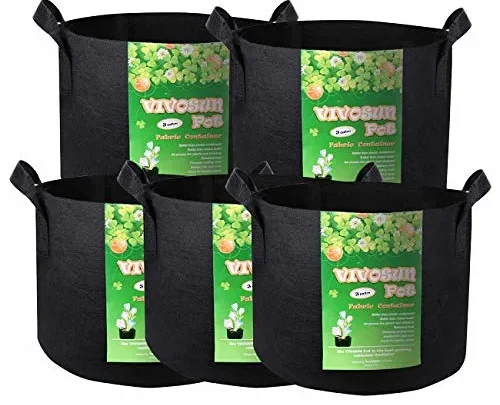
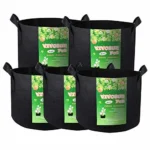
Grow bags breathe from every side, which makes them dry out even quicker.
If a container feels light when you lift it, water. If it feels heavy and solid, wait. In the ground, roots have more space to hunt for moisture.
In a pot, they depend on you completely.
Plant Stage and Weather
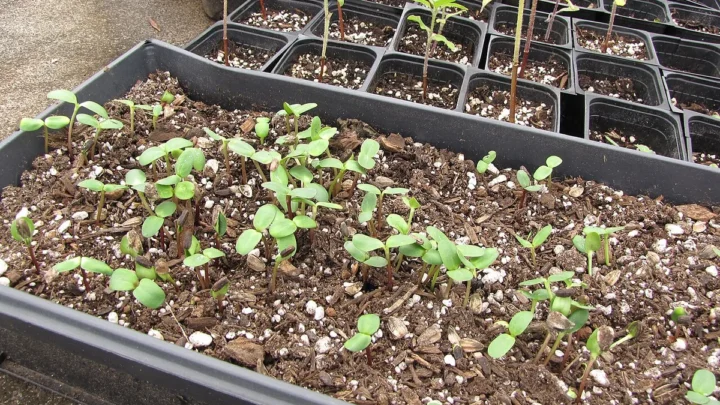
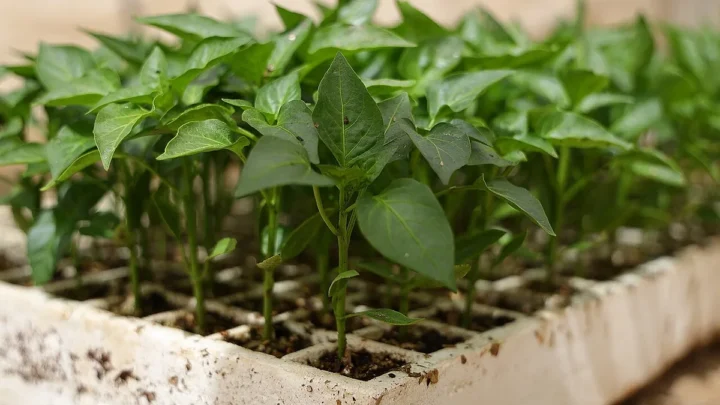
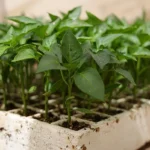
Seedlings don't need much. Their roots reach only a few inches deep, so keep the topsoil evenly moist but never soaked. Once plants flower and set fruit, water demand spikes.
That's when 1 to 2 gallons per mature plant, once or twice a week, makes sense.
Then layer in weather. A rainy weekend means you skip a watering entirely. A 95-degree week with wind means containers might need a drink every day.
Humidity slows evaporation, so a muggy region needs less than the same tomato in Arizona.
The Simple Soil Moisture Checks That Work
You don't need an app or a lab. You need two fingers and about thirty seconds. The key is checking where the roots actually live, not just the surface.
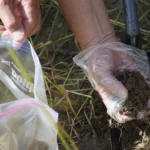
- Finger test. Push a finger into the soil near the stem, up to the second knuckle. If the top inch feels dry and the soil below feels damp, water. If soil sticks to your finger like wet clay, wait.
- Lift test. Pick up a pot or grow bag from the bottom. A dry pot feels surprisingly light. A well-watered pot has weight and heft. Use this test daily if you're unsure.
- Screwdriver test. Push a long screwdriver into the soil near the roots. If it slides in easily, the soil is moist at depth. If it meets resistance, the soil is dry lower down.
- Moisture meter. A simple analog meter works fine when you push it 4 to 6 inches deep. Just remember cheap meters can read inaccurately in very dry or very wet soil. Use it as a hint, not a verdict.
Check once in the morning, before the sun has the chance to dry things out. And if you're in doubt, go with the finger test. It's free, fast, and accurate enough for nearly every home garden.
Deep Watering Done Right: Steps for Every Growing Setup
Deep watering means wetting the soil 6 to 8 inches down, where the bulk of tomato roots live. Shallow sprinkling only wets the top inch, so roots stay shallow and weak. Slow Slow watering gives the soil time to absorb the moisture instead of letting it run off.
Use a watering can with a rose nozzle, a drip emitter, or a hose set to a low trickle. Apply the water at the base of the plant, not the leaves.
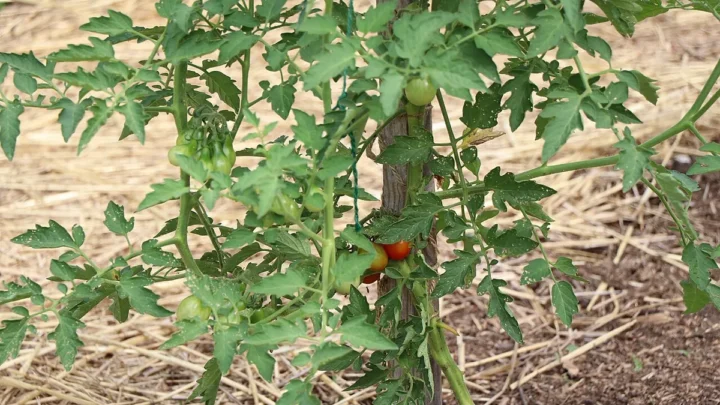
Image source: Openverse / Werner Hofer
In-Ground and Raised Beds
Water around the whole root zone, not just the stem. The active roots spread 12 to 18 inches deep and extend outward to the plant's leaf line. Soaking that entire area builds a stronger, deeper root system.
Stop when the water has penetrated 6 to 8 inches. You can verify that with the screwdriver test or by digging a small probe hole after watering.
Containers and Grow Bags
Containers need the same deep watering, just more often. Water until a little liquid escapes from the drainage holes. That tells you the soil is saturated from top to bottom.
Wait until the top inch or two dries out before the next session. In the peak of summer, that can mean daily watering. On cool, overcast days, it might be every three or four days.
The lift test is your best friend here.
Using Drip Irrigation and Soaker Hoses
Drip emitters and soaker hoses deliver water slowly right at the soil surface. That cuts evaporation and keeps foliage dry. Run the system long enough to wet the root zone, usually 30 to 60 minutes depending on your flow rate and soil type.
As of 2026, many gardeners pair a simple timer with a soil moisture sensor and automate the whole routine. Just remember that sensors and timers don't replace your eyes.
Common Watering Mistakes That Wreck Tomato Plants
Even experienced gardeners slip up. These are the most damaging patterns.
- Watering the leaves. Overhead watering splashes soil onto the foliage and leaves the plant wet for hours. That invites early blight, septoria, and other fungal problems. Point the water at the soil, not the plant.
- Watering a little every day. Shallow watering only wets the top inch, so roots stay near the surface and the plant stays fragile. Instead, water deeply and then let the soil dry out between sessions.
- Watering at night. Wet foliage all night is a fungal feast, and roots drink less in the dark. Water in the morning so leaves dry out and the plant has what it needs for the day.
- Forgetting about rain. Tomatoes need about 1 to 1.5 inches of water each week from rain and irrigation combined. If a storm drops an inch, skip watering for a few days. If you're unsure, use a small rain gauge.
- Skipping mulch. Bare soil loses water to evaporation fast. A 2-inch layer of straw, shredded leaves, or wood chips holds moisture, keeps roots cooler, and blocks soil splashing. Just keep the mulch a few inches away from the stem.
Fix those five and you'll see fewer diseases, less wilting, and a healthier harvest.
Your Watering Decision Guide (Do They Need Water Now?)
When in doubt, run through this quick checklist. It works for in-ground beds, raised beds, containers, and grow bags.
| Check | If this is true | Then |
|---|---|---|
| Top inch of soil is dry | Soil below feels damp | Wait a day, then re-check |
| Top inch is dry | Soil below feels dry | Water deeply now |
| Pot feels light when lifted | Top inch is dry too | Water today, possibly twice in heat |
| Plant wilts in the morning | Soil feels damp | Don't add water, check for root disease or heat stress |
| Plant wilts in the afternoon | Soil feels dry | Water deeply right away, add mulch after |
| Rain added 1 inch or more this week | Soil feels moist 4 inches down | Skip watering until the top inch dries |
| Fruit is splitting or cracking | You water heavily after long dry spells | Water more consistently, don't let soil go bone dry |
If the weather is hot and windy, bump the frequency up by at least one extra session. If it's cool and cloudy, cut back. The goal is a root zone that stays evenly moist between waterings.
Frequently Asked Questions
How often should I water tomatoes in hot weather?
In 90-degree heat, in-ground tomatoes usually need water every 4 to 5 days, and containers need it daily. Check the soil first. A dry top inch with dry soil below means watering time.
During heat waves, grow bags may need watering twice a day.
Can I water tomatoes at night?
Morning watering is best. Wet leaves overnight invite fungal diseases, and roots take up less water after dark. If morning doesn't work, water late afternoon, just before sunset, and aim the stream at the soil so leaves stay dry.
What are signs of overwatering tomatoes?
Yellowing lower leaves, wilting in damp soil, and a sour or musty smell from the earth are common warning signs. Root rot sets in when roots sit in soggy soil for days. If you suspect overwatering, stop watering and let the soil dry until the top 2 inches are no longer sticky.
Do tomato plants need more water when fruiting?
Yes. Surface area of the plant grows, and each fruit fills with water. Once fruit sets, provide 1 to 2 gallons per plant per watering in warm weather.
Avoid letting soil dry out completely, since that feeds blossom end rot and split fruit.
Should I use cold water on tomatoes?
Use room-temperature water when you can. Ice-cold water shocks the roots and slows uptake. Fill a watering can and let it sit in the sun an hour, or pull from a rain barrel that's already warmed up.
Your plants will thank you.

Similar Posts