How to Grow Bell Peppers From Seed
We've found that most home gardeners overthink how to grow bell peppers from seed. The process isn't complicated, but it does follow a few strict rules. Peppers are tropical perennials, so they need consistent warmth and light.
Get those two things right, and the rest just clicks.
Here's one concrete number to anchor on: bell pepper seeds germinate best when the seed-starting mix stays between 75 and 85°F. That temperature range is the single biggest factor between a tray of healthy sprouts and a tray of nothing. So before you buy anything, you need to know your exact timeline.
Here's how to figure it out.
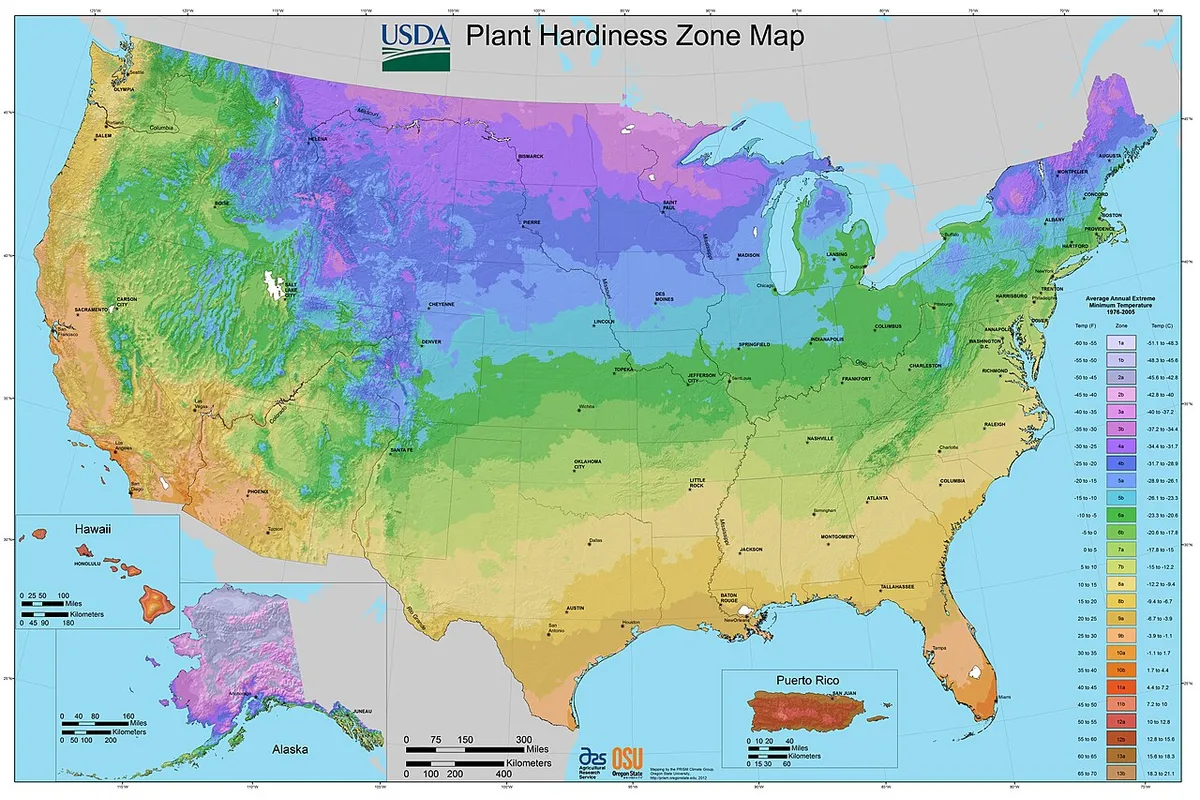
When to Start? Timing Bell Pepper Seeds for Your Zone
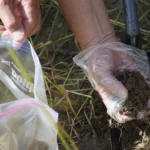
Image source: Wikimedia Commons / USDA-ARS and Oregon State University (OSU)
The short answer is 8 to 10 weeks before your last expected spring frost. But that's a date that moves around a lot. It depends on where you live and whether you're growing indoors or outside.
First, find your USDA Plant Hardiness Zone. That map tells you roughly what winter temperatures plants in your area can handle. You can look yours up on the USDA Plant Hardiness Zone Map.
Then, match your zone to a strategy:
- If you're in Zone 6 or colder, your growing season is short. Start seeds indoors 10 weeks before your last frost. You'll absolutely need grow lights and a heat mat.
- If you're in Zone 7 to 9, you have more flexibility. Start seeds 8 weeks out. You can sometimes get away with a sunny windowsill, though lights still help.
- If you're in Zone 10 or warmer, you can start seeds outdoors in late fall or early winter. Just keep them shaded and moist.
Still unsure about your exact frost date? Check your local university extension. The University of Minnesota Extension publishes detailed seed-starting calendars for northern gardeners, and most states have an equivalent.
One more thing: peppers are slow. From seed, most bell varieties need 120 to 150 days total. That's why timing isn't optional.
Miss the window, and you're waiting a full extra year for ripe fruit.
Count backward from your frost date and mark it on your calendar. That's your starting day.
What You Need: Seed-Starting Gear That Actually Matters
You don't need a greenhouse or fancy equipment. You do need a few specific items that make the difference between healthy seedlings and total drama.
Here's the core setup:
| Tool | Why it matters |
|---|---|
| Seed-starting mix | Light, sterile, holds moisture without waterlogging |
| Trays or cell inserts | Gives each seed room to grow without competing |
| Heat mat | Keeps soil in that 75–85°F germination range |
| Grow light | Prevents leggy, pale seedlings |
| Humidity dome | Locks in moisture while seeds sprout |
You can skip the dome if your trays come with a clear plastic cover. You can also skip the heat mat if your house stays at 75°F or warmer. But if your room sits around 65°F, peppers can take two to three weeks just to show their heads.
The one item you should never skip is a sterile seed-starting mix. Regular garden soil is too heavy, holds too much water, and brings fungal spores that cause damping off.
Choosing seeds matters too. As of 2026, there are dozens of bell pepper cultivars available, from classic 'California Wonder' to disease-resistant hybrids like 'King Arthur' or 'Lunchbox'. All grow the same way, though maturation times differ.
For a first-time grower, pick a variety labeled 65 to 75 days to maturity after transplant. That gets you ripe fruit much sooner.
Step-by-Step: From Seed to Seedling Indoors
Here's the exact workflow we recommend for smooth results.
- Pre-moisten your seed-starting mix. It should feel like a wrung-out sponge, not dripping wet.
- Fill your trays to the top and tap them down lightly.
- Poke a 1/4-inch hole in each cell.
- Drop in two seeds per cell. That gives you an insurance policy in case one fails.
- Cover with a thin layer of mix and press gently.
- Set the tray on your heat mat and cover with the humidity dome.
- Keep the mix between 75 and 85°F.
Now the waiting game begins. Check your tray every morning. Condensation on the dome is normal.
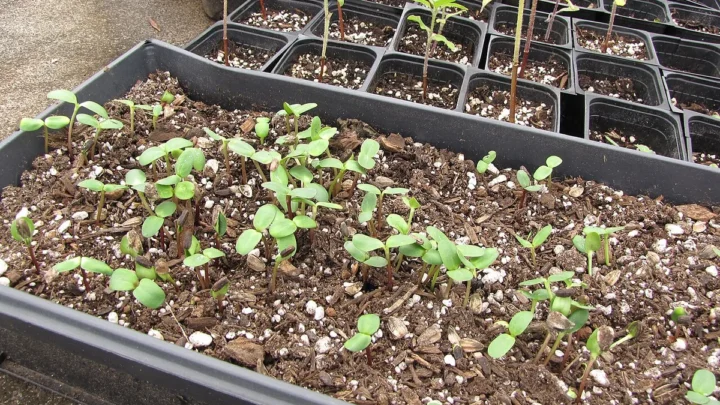
It means the humidity is working. As soon as you see a loop of stem pushing up, move that tray under the grow light and remove the dome.
Now there's a decision branch:
- If both seeds sprout in one cell, snip the weaker one at the soil line. Don't pull it, that disturbs the survivor's roots.
- If nothing sprouts after 21 days, the soil was likely too cold. Warm things up and try again.
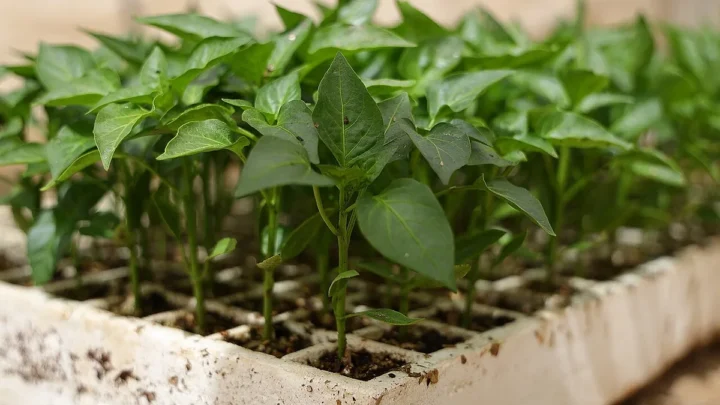
Once your seedlings have their first set of true leaves, the second pair that looks like actual pepper leaves, it's time to pot them up into 3 to 4 inch containers.
The Two Big Decisions: Grow Lights and Heat Mats
This is where most indoor seed starters get into trouble. They either skip both and wonder why their seedlings are spindly, or they buy cheap versions and see poor results.
Let's break down each decision.
Heat mat: do you need one?
If your home stays around 70°F during the day and doesn't drop below 65°F at night, you can germinate peppers without a mat. It just takes longer, often 18 to 21 days. If your room sits at 65°F or below, the soil likely won't stay consistently warm enough for germination at all.
The decision rule: buy a heat mat if you start seeds in winter or early spring in a cool house. They're inexpensive, use little electricity, and shrink germination time to about a week.
Grow light: is a windowsill enough?
A sunny south-facing window can work, but only if it gets 6 to 8 hours of direct sun and your seedlings sit right against the glass. The problem is that most windows don't deliver enough intensity. Seedlings stretch, flop over, and look pale.
The decision rule: use a real grow light positioned 2 to 4 inches above the plants for fluorescent fixtures, or 12 to 24 inches for LEDs. Run it 14 to 16 hours a day on a timer. Leggy, pale seedlings are a clear sign your light is inadequate.
Our research shows that consistent, strong light from day one eliminates most seedling failures. The heat mat matters early. The light matters always.
Transplanting: Know When Your Plants Are Ready
It's tempting to rush peppers outside as soon as spring smells warm. Don't. Peppers are tropical plants, and cold soil shocks them hard.
Here's when you're ready to transplant:
- Each seedling has 4 to 6 true leaves.
- It's been at least 10 weeks since you planted your seeds.
- Night temperatures are consistently above 55°F.
The soil itself matters more than the air. Wait until the soil temperature at 4 inches deep reaches at least 60°F. Cold soil makes peppers sit in place for weeks, and they can turn purple from phosphorus lockout.
Before transplanting, you must harden off the seedlings. This is a slow 7 to 10 day reintroduction to outdoor conditions.
Day 1 and 2: put them outside in full shade for an hour, then bring them back in.
Day 3 to 5: add an hour each day, and start giving morning sun.
Day 6 to 9: leave them out overnight if temperatures stay above 55°F.
Then, transplant on a cloudy day or late afternoon. That reduces transplant shock.
If you skip hardening off, the leaves will scorch. And don't plant them deep like tomatoes. Peppers like to sit at the same soil level they were growing at in their pots.
Container vs. In-Ground: Where Peppers Grow Best
Bell peppers will grow happily in both containers and garden beds. The choice really comes down to your space, your soil, and how much watering you're willing to do.
| Growing setup | Space per plant | Watering needs | Yield potential |
|---|---|---|---|
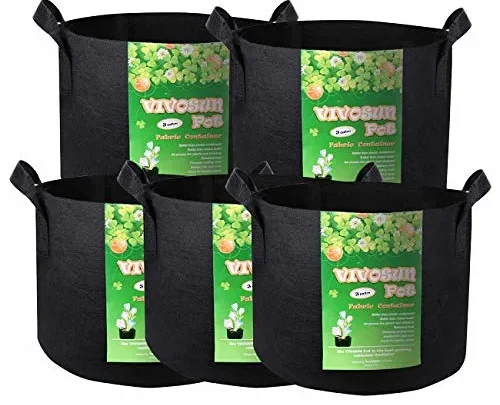
| 5-gallon container | 18–24 inches apart | Frequent, daily in hot weather | 5–10 peppers per plant |
| In-ground bed | 18–24 inches apart | Less frequent, deep watering | 10–20 peppers per plant |
| Raised bed | 18–24 inches apart | Moderate, similar to in-ground | Similar to in-ground |
In-ground beds give you bigger root space and better moisture retention. That's why they usually produce more fruit per plant. But they also mean you're at the mercy of your native soil.
If your soil is heavy clay or drains poorly, you'll fight root rot all season.
Containers let you control everything. You choose the potting mix, you move the plant to sunnier spots, and you avoid most soil-borne diseases. The trade-off is vigilance.
Containers dry out fast, especially in midsummer. If you miss one watering day during a heat wave, your peppers may drop blossoms.
Here's the simple rule. If you have good ground soil and can prep it with compost, go in-ground. If your soil is questionable or you're short on space, use 5-gallon containers with a high-quality potting mix.
Both work. Neither is wrong.
Common Seedling Mistakes and How to Fix Them
Most pepper seedling problems come down to a handful of avoidable mistakes. Catching them early makes the difference between a thriving tray and a sad pile of stems.
- Leggy, pale seedlings. That's a light problem. If your seedlings are stretching toward a weak source, you need a stronger grow light kept 2 to 4 inches above them for 14, 16 hours daily.
- Sudden collapse at the soil line. That's damping off, a fungal disease. It hits when soil stays too wet and air moves too little. Let the top of the mix dry slightly between waterings, and run a small fan on low.
- Yellow lower leaves. The plant is hungry. Once true leaves appear, start feeding with a balanced liquid fertilizer at half strength every two weeks.
- Purple stems and leaves. Cold soil stress is the usual culprit. Check that your heat mat is still working and soil temperature stays above 60°F after germination.
If you see these signs early, you can fix them fast. If you wait, you'll likely lose the plant. Check your seedlings every single morning.
It takes 30 seconds and saves you a whole tray.
Frequently Asked Questions
How long does it take to grow bell peppers from seed?
From sowing to ripe fruit, expect 120 to 150 days. That includes 8 to 10 weeks indoors as seedlings, then another 60 to 90 days in the garden. Earlier-season varieties, around 65 days to maturity, shorten the final stretch.
When should I start bell pepper seeds indoors?
Start them 8 to 10 weeks before your last expected spring frost. Count backward from your local frost date and write it on a calendar. If you start too late, the fruit won't ripen before fall cold arrives.
Do peppers need light to germinate?
No. Bell pepper seeds sprout in darkness. That's why you plant them 1/4 inch deep in the soil.
Light only matters after germination, when seedlings need it immediately to avoid stretching.
Why are my pepper seedlings turning purple?
Purple coloring usually points to cold stress or a phosphorus deficiency. Check your soil temperature first, it should stay above 60°F. If warmth is fine, adjust your feed to a fertilizer with sufficient phosphorus and the color should fade.

Similar Posts